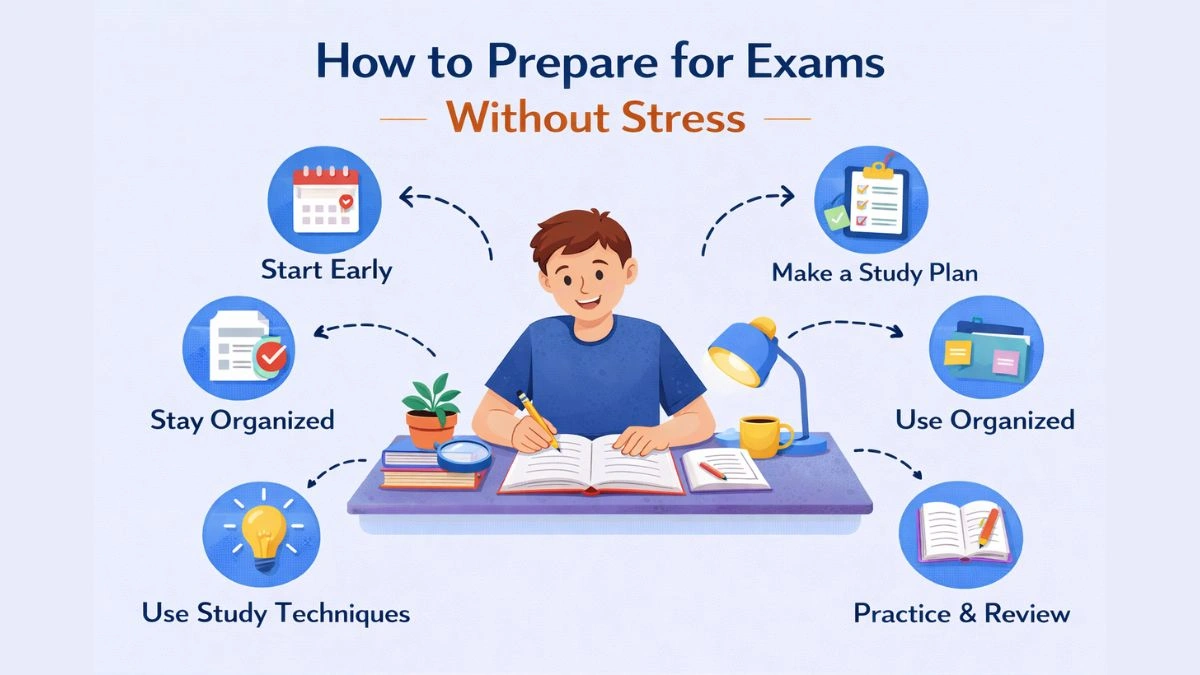
In this guide, we’ll explore proven strategies, study routines, and stress-management techniques to help students prepare for exams confidently in 2026.
Why Exam Stress Happens
Exam stress is common and often caused by:
- Fear of failure or poor grades
- Lack of preparation or organization
- Overthinking or negative self-talk
- Poor time management
- Physical factors like fatigue, hunger, or sleep deprivation
High stress can reduce focus, memory retention, and performance, making even well-prepared students underperform.
Step 1: Start Early and Plan Your Preparation
One of the most effective ways to reduce stress is starting early.
Tips:
- Break your syllabus into small, manageable parts
- Create a revision timetable weeks or months before exams
- Include time for each subject, practice papers, and breaks
Example:
- 2 months before exams: Cover all chapters
- 1 month before exams: Revise weak topics and practice sample papers
- Last week: Quick revisions and formula/mind map review
Why it works: Early preparation avoids last-minute panic and cramming.
Step 2: Create a Structured Study Routine
A routine helps you study consistently without burning out.
Tips:
- Study in focused blocks (45–50 minutes) with 5–10 minute breaks
- Start with difficult subjects in the morning when concentration is high
- Alternate subjects to maintain interest (interleaving)
- Stick to your schedule consistently
Why it works: Structured routines reduce anxiety and improve focus and productivity.
Step 3: Use Effective Study Techniques
Certain study techniques increase learning efficiency and reduce stress:
- Active Recall: Test yourself after studying a topic
- Spaced Repetition: Review topics multiple times at intervals
- Mind Mapping & Visuals: Use diagrams and flowcharts
- Practice Tests: Solve previous year papers and quizzes
Tip: Avoid passive reading. Engage actively with the material to retain more and worry less.
Step 4: Take Care of Your Health
Your physical and mental health directly affects exam stress.
Tips:
- Sleep 7–8 hours daily
- Eat healthy meals with fruits, vegetables, and proteins
- Drink plenty of water
- Exercise or do yoga to reduce tension
- Take short breaks while studying
Why it works: A healthy body supports a calm mind and better memory.
Step 5: Manage Your Time Wisely
Time pressure is a major source of exam stress.
Tips:
- Use planners, timers, or apps to track study hours
- Prioritize difficult or high-weightage topics first
- Break tasks into smaller, achievable goals
- Avoid multitasking
Why it works: Efficient time management reduces overwhelm and increases confidence.
Step 6: Stay Positive and Avoid Negative Thinking
Mindset plays a huge role in exam preparation and stress levels.
Tips:
- Replace “I can’t do this” with “I will try my best”
- Visualize success instead of failure
- Celebrate small achievements daily
- Surround yourself with supportive friends and family
Why it works: Positive thinking reduces anxiety and improves focus.
Step 7: Practice Relaxation Techniques
Relaxation techniques help your brain stay calm during preparation and exams.
Techniques:
- Deep breathing exercises (inhale 4s, hold 4s, exhale 6s)
- Meditation for 5–10 minutes daily
- Progressive muscle relaxation (tensing and releasing muscles)
- Short walks or stretching breaks
Why it works: Reduces stress hormones and increases concentration.
Step 8: Avoid Last-Minute Cramming
Cramming increases stress and decreases retention.
Tips:
- Stick to your revision plan
- Focus on summarizing notes and formulas in the final week
- Avoid learning new topics at the last minute
Why it works: Cramming creates panic, whereas organized revision builds confidence.
Step 9: Prepare Mentally for Exam Day
Mental preparation ensures you remain calm and focused during exams.
Tips:
- Practice mock exams under timed conditions
- Visualize yourself answering questions confidently
- Pack essentials (admit card, stationery) the night before
- Arrive early to avoid last-minute stress
Why it works: Familiarity with conditions reduces anxiety and improves performance.
Step 10: Reward Yourself and Stay Balanced
Rewarding yourself maintains motivation and reduces burnout.
Tips:
- Take short breaks to enjoy hobbies, music, or a snack
- Set small rewards after completing chapters or revisions
- Balance study with sleep, meals, and social time
Why it works: Positive reinforcement makes studying stress-free and enjoyable.
Sample Stress-Free Study Schedule (6 Hours)
| Time | Activity |
|---|---|
| 6:00 AM – 6:30 AM | Wake up, light exercise, breakfast |
| 6:30 AM – 7:30 AM | Study difficult subject (Maths/Science) |
| 7:30 AM – 7:40 AM | Short break |
| 7:40 AM – 8:40 AM | Study second subject (Languages/Socials) |
| 8:40 AM – 8:50 AM | Break & hydration |
| 8:50 AM – 9:50 AM | Active recall & practice questions |
| 9:50 AM – 10:00 AM | Quick stretch or walk |
| 10:00 AM – 11:00 AM | Revise notes, mind maps, or diagrams |
Tip: Adjust based on stamina, subject difficulty, and school schedule.
Also Read : Top 10 Study Tips to Boost Your Grades in 2026
Conclusion
Preparing for exams without stress is possible with the right planning, study techniques, and mindset. By:
- Starting early and planning effectively
- Using structured study routines and active learning
- Taking care of health and relaxation
- Managing time efficiently and staying positive
Students can approach exams confidently, stay calm, and maximize their performance.
Remember, stress is not a requirement for success—consistency, focus, and a balanced approach guarantee results in 2026.
FAQs – Preparing for Exams Without Stress
1. How can I stop worrying about exams?
- Stick to a plan, start early, practice regularly, and use relaxation techniques.
2. Is it okay to study late at night?
- Short night sessions are okay, but avoid sacrificing sleep for long hours.
3. How can I revise efficiently?
- Use active recall, spaced repetition, practice tests, and concise notes.
4. What should I eat before exams?
- Light meals with proteins, fruits, and hydration; avoid junk food.
5. Can meditation really reduce exam stress?
- Yes. Even 5–10 minutes daily improves focus and reduces anxiety.