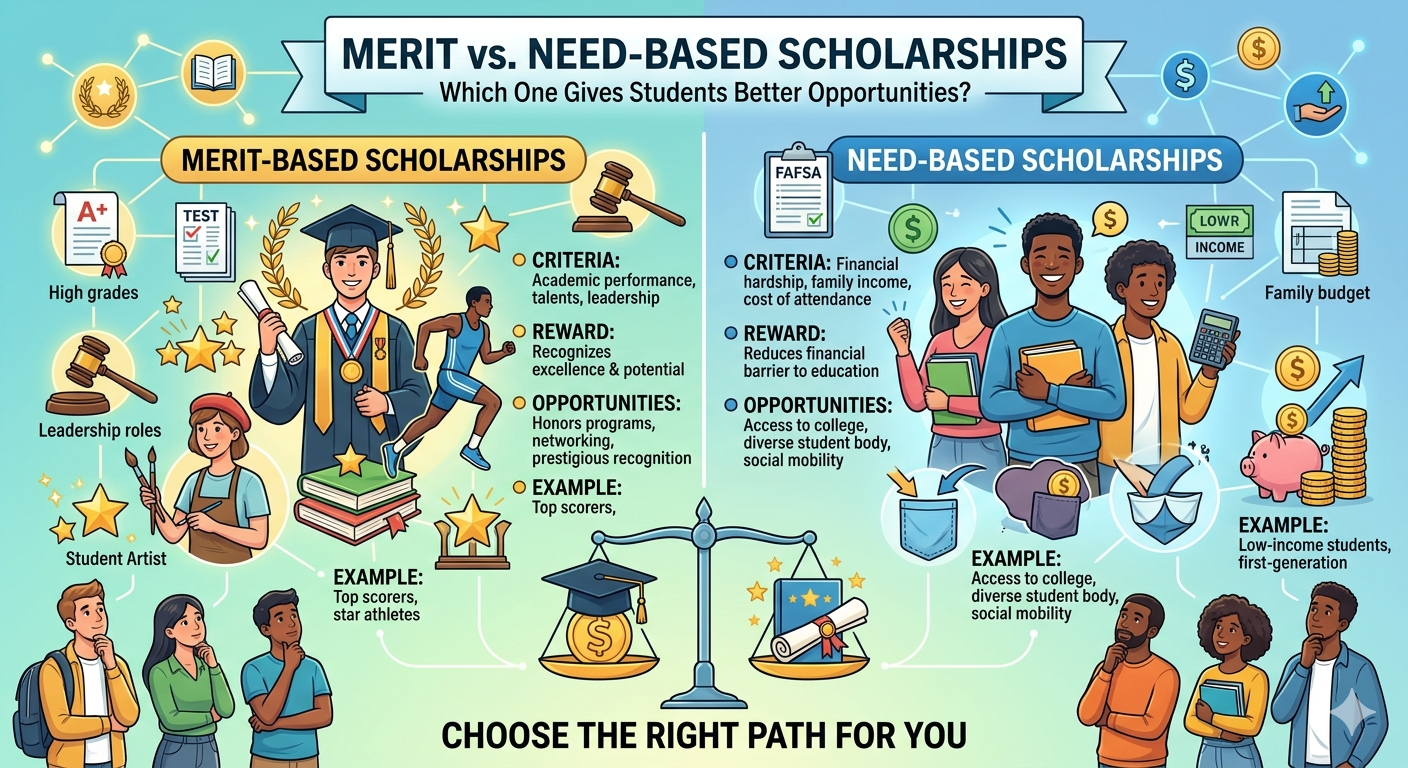
Discover the key differences between merit-based and need-based scholarships. Learn which scholarship type offers better opportunities for students, financial support, academic growth, and career success.
Higher education is becoming more expensive every year, making scholarships one of the most important tools for students who want to continue their studies without financial stress. Scholarships not only reduce the burden of tuition fees but also encourage students to achieve their educational goals with confidence.
Among the many types of scholarships available worldwide, two major categories dominate the education system: merit-based scholarships and need-based scholarships. Both provide financial assistance, but they are designed for different purposes and different types of students.
Many students and parents often ask an important question: Which scholarship gives better opportunities — merit-based or need-based? The answer depends on several factors, including academic performance, financial condition, career goals, and access to educational resources.
In this article, we will explore the differences between merit-based and need-based scholarships, their advantages and disadvantages, eligibility requirements, and which one creates better opportunities for students in the long term.
What Are Merit-Based Scholarships?
Merit-based scholarships are awarded to students based on their achievements and performance. These achievements may include:
- Academic excellence
- High GPA or test scores
- Sports achievements
- Leadership qualities
- Artistic talent
- Community service
- Extracurricular activities
The primary purpose of merit scholarships is to reward talented students and encourage them to continue performing at a high level.
Common Examples of Merit Scholarships
- University topper scholarships
- Sports scholarships
- Music and arts scholarships
- Leadership awards
- National merit scholarships
Students with exceptional achievements are often selected regardless of their family income.
What Are Need-Based Scholarships?
Need-based scholarships are designed for students who come from financially weaker backgrounds. These scholarships focus more on the student’s economic condition rather than academic achievements.
The goal of need-based scholarships is to ensure equal access to education for all students, especially those who cannot afford tuition fees and other educational expenses.
Factors Considered in Need-Based Scholarships
- Family income
- Financial hardships
- Number of dependents in the family
- Cost of education
- Living expenses
Many governments, NGOs, universities, and charitable organizations offer need-based scholarships to support underprivileged students.
Major Differences Between Merit and Need-Based Scholarships
| Feature | Merit-Based Scholarships | Need-Based Scholarships |
|---|---|---|
| Basis of Selection | Achievement & talent | Financial condition |
| Academic Performance | Very important | Moderate importance |
| Family Income | Usually not considered | Main factor |
| Competition Level | Extremely competitive | Competitive but accessible |
| Purpose | Reward excellence | Provide equal opportunity |
| Eligibility | High achievers | Financially needy students |
Advantages of Merit-Based Scholarships
1. Rewards Hard Work and Excellence
Merit scholarships motivate students to perform better academically and professionally. Students who consistently achieve high grades or excel in sports and arts receive recognition and financial rewards.
This creates a culture of competition and excellence.
2. Enhances Resume and Career Opportunities
Winning a prestigious merit scholarship can significantly improve a student’s profile. Employers and universities often value scholarship recipients because it reflects discipline, intelligence, and dedication.
For example, students receiving national merit awards may gain better internship and job opportunities.
3. Encourages Skill Development
Merit scholarships are not limited to academics. They also support talents such as:
- Sports
- Music
- Debate
- Innovation
- Research
- Leadership
This helps students develop multiple skills that contribute to long-term career growth.
4. International Education Opportunities
Many international universities offer merit-based scholarships to attract talented students globally. These scholarships often cover:
- Tuition fees
- Accommodation
- Travel expenses
- Research funding
As a result, talented students gain access to world-class education.
Disadvantages of Merit-Based Scholarships
1. Extremely Competitive
Since merit scholarships are based on performance, competition is very high. Even highly talented students may fail to secure scholarships due to limited seats.
2. Pressure on Students
Students often face intense academic pressure while trying to maintain high grades and achievements.
This pressure can affect mental health and personal development.
3. May Ignore Financial Hardship
A student from a wealthy family can still receive a merit scholarship, while a financially struggling student with average marks may not get support.
This sometimes creates inequality in access to education.
Advantages of Need-Based Scholarships
1. Promotes Equal Educational Opportunities
Need-based scholarships help financially weak students pursue higher education without worrying about tuition fees.
This creates social equality and reduces educational gaps between rich and poor students.
2. Reduces Financial Stress
Students from low-income families often struggle with educational expenses. Need-based scholarships reduce stress related to:
- Tuition fees
- Hostel costs
- Books and supplies
- Transportation
As a result, students can focus more on learning.
3. Encourages Higher Education Among Poor Families
Many talented students discontinue education because of financial difficulties. Need-based scholarships encourage them to continue studying and improve their future.
4. Supports Social Development
When underprivileged students receive education, society benefits through:
- Increased employment
- Reduced poverty
- Better economic growth
- Improved literacy rates
Need-based scholarships therefore contribute to national development.
Disadvantages of Need-Based Scholarships
1. Limited Funding
Many need-based scholarship programs have limited budgets. This means not every deserving student receives financial assistance.
2. Complex Documentation
Students often need to submit several documents, including:
- Income certificates
- Tax returns
- Bank statements
- Residence proof
The process can become complicated and time-consuming.
3. Less Recognition
Unlike prestigious merit scholarships, need-based scholarships may not provide the same level of recognition or career prestige.
Which Scholarship Gives Better Opportunities?
The answer depends on the student’s situation and goals.
Merit Scholarships Offer Better Opportunities For:
- High-achieving students
- Students aiming for top universities
- Those seeking global exposure
- Students with exceptional talents
These scholarships often open doors to elite institutions, international programs, and professional networking opportunities.
Need-Based Scholarships Offer Better Opportunities For:
- Financially struggling students
- First-generation college students
- Students from rural or underdeveloped regions
- Families unable to afford education
These scholarships make education accessible and help students break the cycle of poverty.
Can Students Get Both Scholarships?
Yes, many institutions offer a combination of merit and need-based scholarships. These are sometimes called hybrid scholarships.
For example:
- A student with excellent grades and financial need may receive full funding.
- Universities may provide academic scholarships along with financial aid packages.
This approach ensures both talent and financial challenges are considered fairly.
How to Increase Scholarship Chances
1. Maintain Strong Academic Performance
Good grades improve eligibility for both merit and need-based scholarships.
2. Participate in Extracurricular Activities
Leadership, volunteering, sports, and community service can strengthen scholarship applications.
3. Prepare Strong Personal Statements
A well-written essay explaining goals, achievements, and financial need can create a strong impression.
4. Apply Early
Many scholarships have strict deadlines. Applying early improves chances of selection.
5. Research Scholarship Opportunities
Students should regularly check:
- University websites
- Government portals
- Educational organizations
- NGO scholarship programs
Importance of Scholarships in Modern Education
Scholarships are becoming increasingly important because education costs are rising globally. Student loans often create long-term debt, making scholarships a better alternative.
Benefits of scholarships include:
- Debt-free education
- Better career opportunities
- Increased confidence
- Academic motivation
- Financial independence
Both merit and need-based scholarships contribute significantly to educational accessibility and student success.
Global Trends in Scholarships
Many countries are expanding scholarship programs to support students.
Popular Scholarship Destinations
- United States
- Canada
- United Kingdom
- Australia
- Germany
Universities worldwide are now combining merit and financial need assessments to ensure fair education opportunities.
Online scholarship platforms and digital applications have also made scholarships more accessible than ever before.
Merit vs Need-Based Scholarships: Final Comparison
| Criteria | Merit-Based | Need-Based |
|---|---|---|
| Best for | High achievers | Financially needy students |
| Focus | Talent & performance | Economic support |
| Recognition | High prestige | Social support |
| Accessibility | Competitive | Wider social inclusion |
| Long-Term Impact | Career growth | Educational access |
Both scholarships play vital roles in education systems. One rewards excellence, while the other ensures equal opportunity.
Conclusion
Merit-based and need-based scholarships both provide valuable opportunities, but they serve different purposes. Merit scholarships reward talent, hard work, and achievement, helping students access prestigious universities and career opportunities. On the other hand, need-based scholarships support financially struggling students and ensure education remains accessible to everyone.
Neither scholarship type is better universally. The best scholarship depends on the student’s academic performance, financial condition, and future goals.
An ideal education system should balance both merit and need so that talented students are rewarded while financially disadvantaged students are not left behind. Together, these scholarships create a fairer and more inclusive educational environment.
FAQs
1. What is the main difference between merit and need-based scholarships?
Merit-based scholarships are awarded based on achievements and performance, while need-based scholarships are given according to financial need.
2. Can a student apply for both scholarships?
Yes, many universities allow students to apply for both merit and need-based scholarships simultaneously.
3. Which scholarship is easier to get?
Need-based scholarships may be more accessible for financially struggling students, while merit scholarships are usually highly competitive.
4. Do merit scholarships require high grades?
Yes, most merit scholarships require excellent academic performance or exceptional talent.
5. Why are need-based scholarships important?
They help financially disadvantaged students continue their education and reduce inequality in access to higher education.


