Introduction: Investing in Culture and Expression
While STEM fields often get the most attention, the arts and humanities are the soul of our society. However, creative students often face unique challenges in finding financial support. Arts and humanities scholarships exist to ensure that talented writers, artists, musicians, and historians can pursue their passions without being crushed by financial debt. This guide explores how to find and win funding for a creative education.
The Value of a Humanities Education
In an increasingly automated world, critical thinking, communication, and creative problem-solving are more valuable than ever. Arts and humanities scholarships recognize this value. Many private foundations and university departments offer these awards to foster the next generation of cultural leaders, recognizing that financial barriers shouldn’t stifle artistic innovation.
Where to Look for Creative Funding
Search beyond the standard federal aid. Specialized grants from organizations like the National Endowment for the Arts (NEA), local arts councils, and private endowments (like the Guggenheim or Getty foundations) are primary sources for arts and humanities scholarships. Additionally, university departments often have “talent awards” that are determined during the audition or portfolio review process.
The Power of the Portfolio
For creative students, your work speaks louder than your grades. Whether it’s a collection of paintings, a musical performance, or a series of essays, your portfolio is the centerpiece of your application for arts and humanities scholarships. Ensure it is professionally curated, highlights your unique voice, and demonstrates a progression of skill over time.
Conclusion
Pursuing a career in the arts takes courage and talent. By leveraging arts and humanities scholarships, you can focus on mastering your craft and contributing to the global cultural conversation without the weight of financial insecurity.
Frequently Asked Questions (FAQs)
1. Are there music scholarships for non-music majors?
Yes! Many university bands and orchestras offer “participation scholarships” to students of any major who contribute to their ensembles.
2. How do I prepare a portfolio for a scholarship?
Select your best 10–15 pieces, ensure high-quality documentation (photos or recordings), and include an artist statement explaining your vision.
3. Do writers qualify for these scholarships?
Absolutely. Many literary journals and foundations offer scholarships for creative writing, journalism, and poetry.
4. Is financial need a factor for arts scholarships?
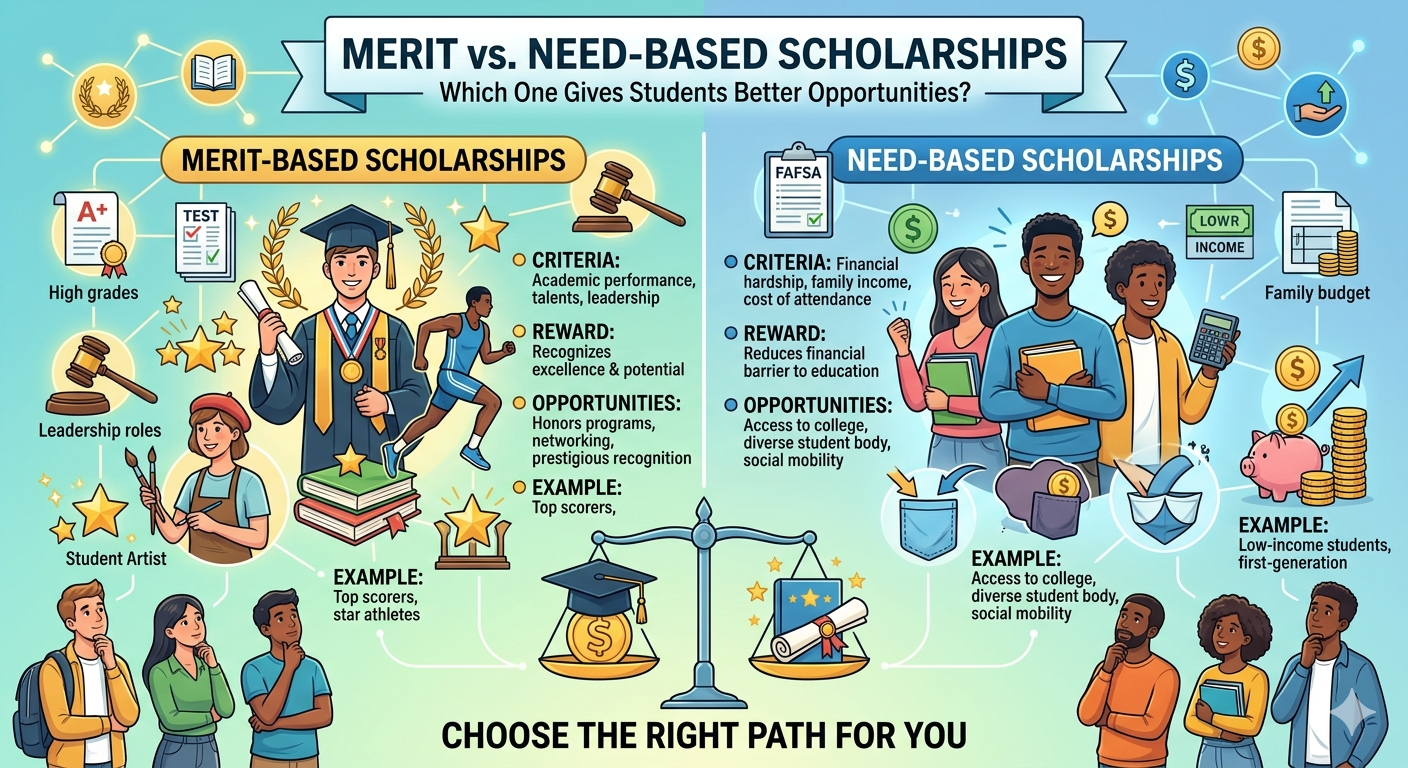
Some are need-based, but many are “merit-based talent awards” focused entirely on your creative ability.
5. Can I get a scholarship for digital arts?
Yes, scholarships for Graphic Design, Animation, and Game Design are currently some of the fastest-growing categories.