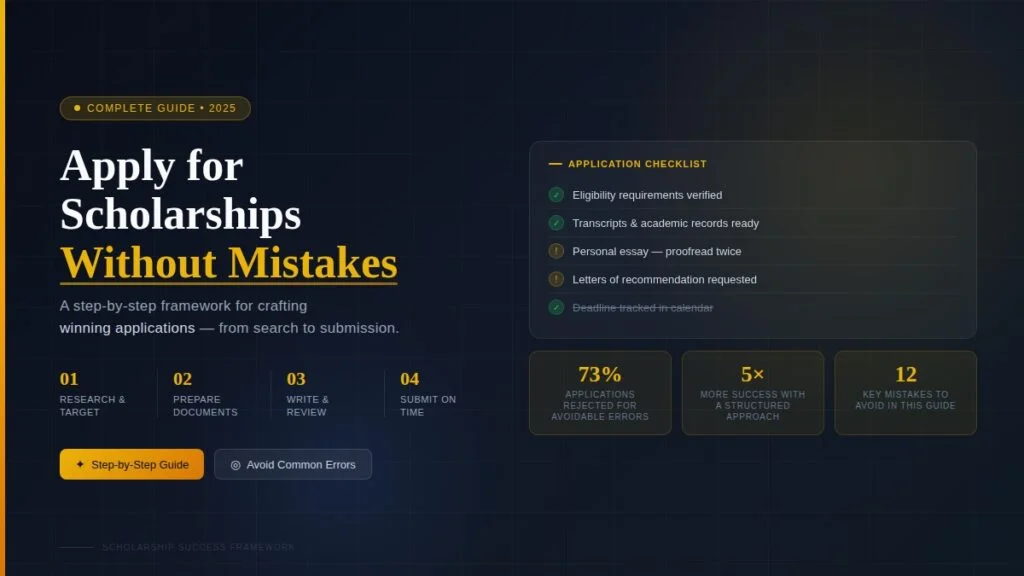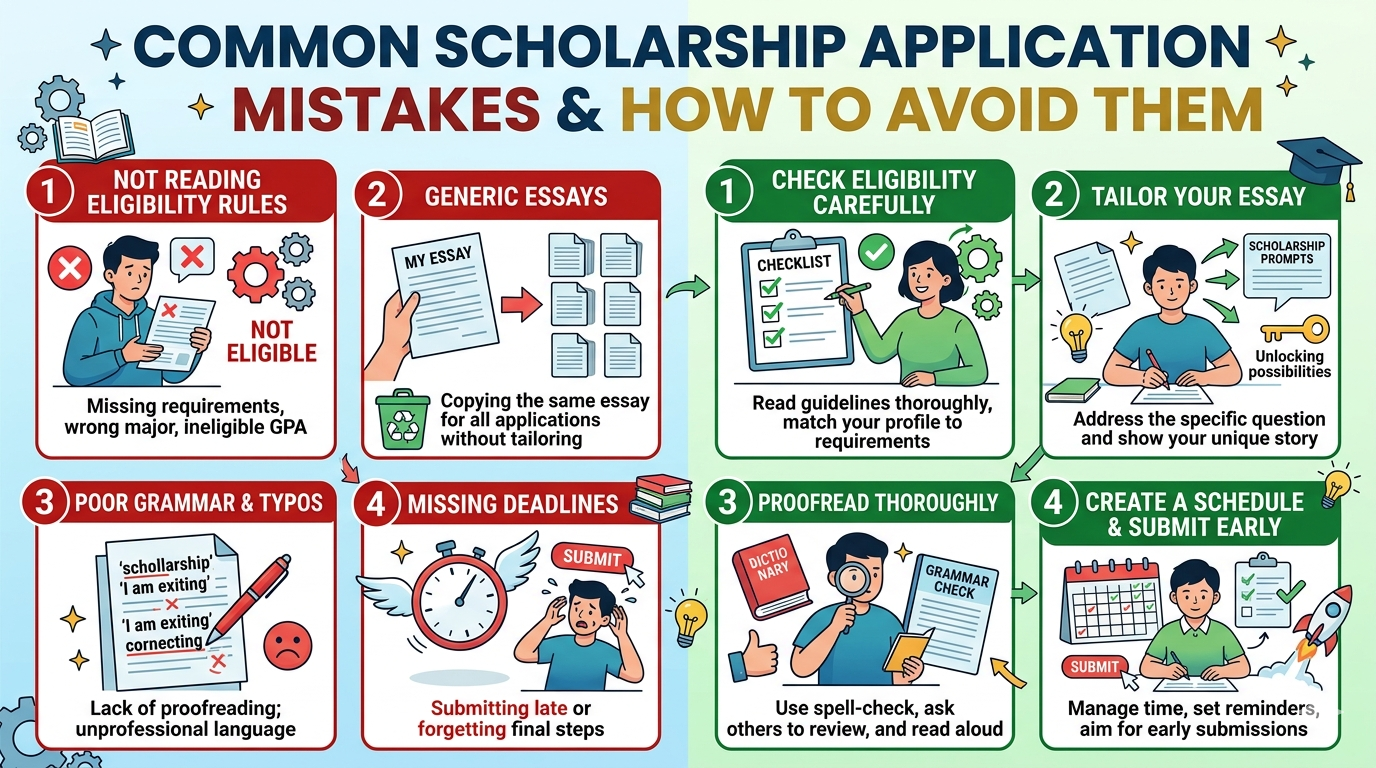
Avoid the most common scholarship application mistakes with this complete guide. Learn how to improve your chances of winning scholarships with practical tips, expert advice, and proven strategies.
Applying for scholarships can be one of the most effective ways to fund your education without taking on debt. However, competition is intense, and even small mistakes can cost you a valuable opportunity. Many students miss out not because they are unqualified, but because of avoidable errors in their applications.
Understanding these common mistakes—and learning how to avoid them—can significantly improve your chances of success. This guide explores the most frequent scholarship application errors and provides practical solutions to help you stand out.
1. Missing Deadlines
The Mistake:
One of the most common and costly errors is submitting applications after the deadline. Scholarship committees are strict about timelines, and late applications are usually not considered.
How to Avoid It:
Create a scholarship calendar with all deadlines clearly marked. Set reminders at least a week in advance. Try to submit your application a few days early to avoid last-minute issues like internet problems or missing documents.
2. Not Following Instructions
The Mistake:
Each scholarship has specific requirements, such as word limits, formatting rules, or required documents. Ignoring these details can lead to immediate rejection.
How to Avoid It:
Carefully read all instructions multiple times. Make a checklist of requirements and ensure each one is fulfilled before submission. Treat guidelines as mandatory, not optional.
3. Submitting a Generic Application
The Mistake:
Using the same essay or application for multiple scholarships without customization can make your submission feel impersonal and irrelevant.
How to Avoid It:
Tailor each application to the specific scholarship. Research the organization offering the scholarship and align your essay with their values, mission, and goals.
4. Weak Personal Statement
The Mistake:
A vague or uninspiring personal statement fails to capture the attention of reviewers. Many students simply list achievements instead of telling a compelling story.
How to Avoid It:
Focus on storytelling. Share your experiences, challenges, goals, and motivations. Be authentic and reflective. Use specific examples to make your essay memorable.
5. Ignoring Proofreading
The Mistake:
Spelling, grammar, and formatting errors can make your application look careless and unprofessional.
How to Avoid It:
Always proofread your application multiple times. Use tools like grammar checkers and ask a teacher, mentor, or friend to review your work. A fresh set of eyes can catch mistakes you might miss.
6. Incomplete Applications
The Mistake:
Missing documents such as transcripts, recommendation letters, or financial details can disqualify your application.
How to Avoid It:
Double-check all requirements before submitting. Use a checklist to ensure every document is included. Start early so you have enough time to gather everything.
7. Poor Recommendation Letters
The Mistake:
Choosing the wrong person for a recommendation or failing to guide them can result in weak letters.
How to Avoid It:
Select recommenders who know you well and can speak about your strengths. Provide them with your resume and details about the scholarship. Give them enough time to write a strong letter.
8. Lack of Focus on Achievements
The Mistake:
Many applicants fail to highlight their achievements effectively or underestimate their accomplishments.
How to Avoid It:
Clearly present your academic, extracurricular, and personal achievements. Quantify your impact where possible (e.g., “led a team of 10,” “increased participation by 30%”).
9. Overlooking Eligibility Criteria
The Mistake:
Applying for scholarships you are not eligible for wastes time and effort.
How to Avoid It:
Carefully review eligibility criteria before applying. Focus on scholarships that match your qualifications, background, and goals.
10. Writing Too Much or Too Little
The Mistake:
Exceeding word limits or submitting overly short responses can hurt your application.
How to Avoid It:
Stick to the required word count. Be concise but thorough. Make every word count by focusing on relevant information.
11. Lack of Originality
The Mistake:
Using clichés or copying content from the internet reduces your chances of standing out.
How to Avoid It:
Be original and authentic. Share your unique perspective and experiences. Scholarship committees value honesty and individuality.
12. Poor Time Management
The Mistake:
Procrastination leads to rushed applications, increasing the chances of errors.
How to Avoid It:
Start early and break the application process into manageable steps. Allocate time for research, writing, editing, and final review.
13. Not Demonstrating Financial Need Properly
The Mistake:
Failing to clearly explain your financial situation can weaken your application for need-based scholarships.
How to Avoid It:
Be honest and specific about your financial circumstances. Provide accurate details and explain how the scholarship will help you achieve your goals.
14. Ignoring Extracurricular Activities
The Mistake:
Focusing only on academics and ignoring extracurricular involvement can make your profile less appealing.
How to Avoid It:
Highlight your participation in sports, clubs, volunteering, or leadership roles. These activities demonstrate well-roundedness and initiative.
15. Not Practicing Interview Skills
The Mistake:
Some scholarships require interviews, and poor performance can cost you the award.
How to Avoid It:
Prepare for common interview questions. Practice with a mentor or friend. Be confident, honest, and articulate during the interview.
16. Lack of Clear Goals
The Mistake:
Not clearly explaining your career or academic goals can make your application less compelling.
How to Avoid It:
Clearly outline your short-term and long-term goals. Explain how the scholarship will help you achieve them.
Conclusion
Applying for scholarships is a competitive process, but avoiding common mistakes can give you a significant advantage. From meeting deadlines to crafting a compelling personal statement, every detail matters.
By staying organized, following instructions, and presenting your authentic self, you can greatly improve your chances of success. Remember, scholarships are not just about academic excellence—they are about potential, passion, and purpose.
Take the time to prepare thoroughly, and you will be one step closer to achieving your educational dreams.
FAQs
1. What is the most common mistake in scholarship applications?
Missing deadlines and submitting incomplete applications are among the most common mistakes.
2. How important is the personal statement?
The personal statement is crucial as it allows you to showcase your personality, goals, and uniqueness.
3. Can I use the same essay for multiple scholarships?
You can reuse parts of an essay, but it is important to customize each application to fit the specific scholarship.
4. How early should I start applying for scholarships?
Ideally, start at least 3–6 months before the deadline to allow enough time for preparation.
5. Do extracurricular activities matter?
Yes, they show leadership, teamwork, and initiative, which are highly valued by scholarship committees.